
Maximising Space: 10 Clever Storage Solutions for Tiny Home Interiors
The downsized lifestyle is taking Australia by storm. According to the Australian Bureau of Statistics (ABS), the mean price of residential dwellings in Australia has climbed to over $1.11 million, with New South Wales leading at a staggering $1.32 million. Faced with these sky-high housing costs, thousands of Australians are turning to tiny houses as an affordable, sustainable, and liberating path to homeownership.
However, trading hundreds of square metres for a compact footprint requires a complete rethink of how we use our spaces. The secret to thriving in a downsized environment isn’t about sacrificing what you love; it’s about mastering tiny house storage solutions.
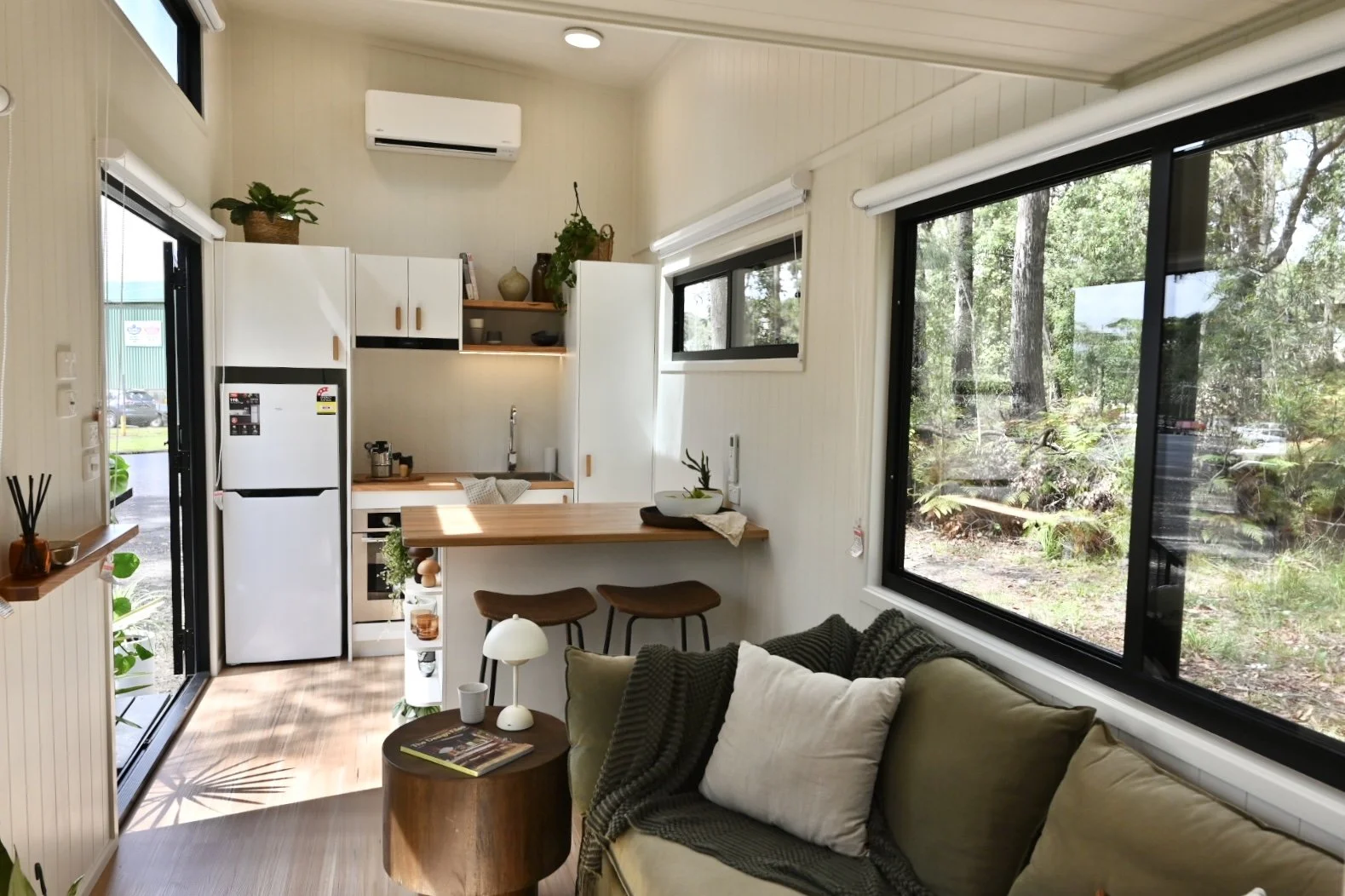
If you want to unlock the full potential of your home, here are 10 clever ways to design and organise your tiny home interiors for ultimate functionality.
1. Embrace Vertical Space Design
When floor area is limited, look up! Vertical space design is the golden rule of small-space living. Installing floor-to-ceiling shelving units, tall open bookshelves, and hanging racks ensures that every centimetre of wall space is working efficiently.
Using high-wall perches for items you do not use daily keeps your eye moving upward, making your overall living area feel significantly larger than it is.
2. Install Storage Stairs
Ladders are a classic space-saver, but fixed staircases leading up to a loft bedroom offer an incredible hidden opportunity. By custom-building drawers, pull-out cabinets, or open cubbies directly into the profile of the stairs, you turn a single-use structural element into a massive wardrobe or pantry space.
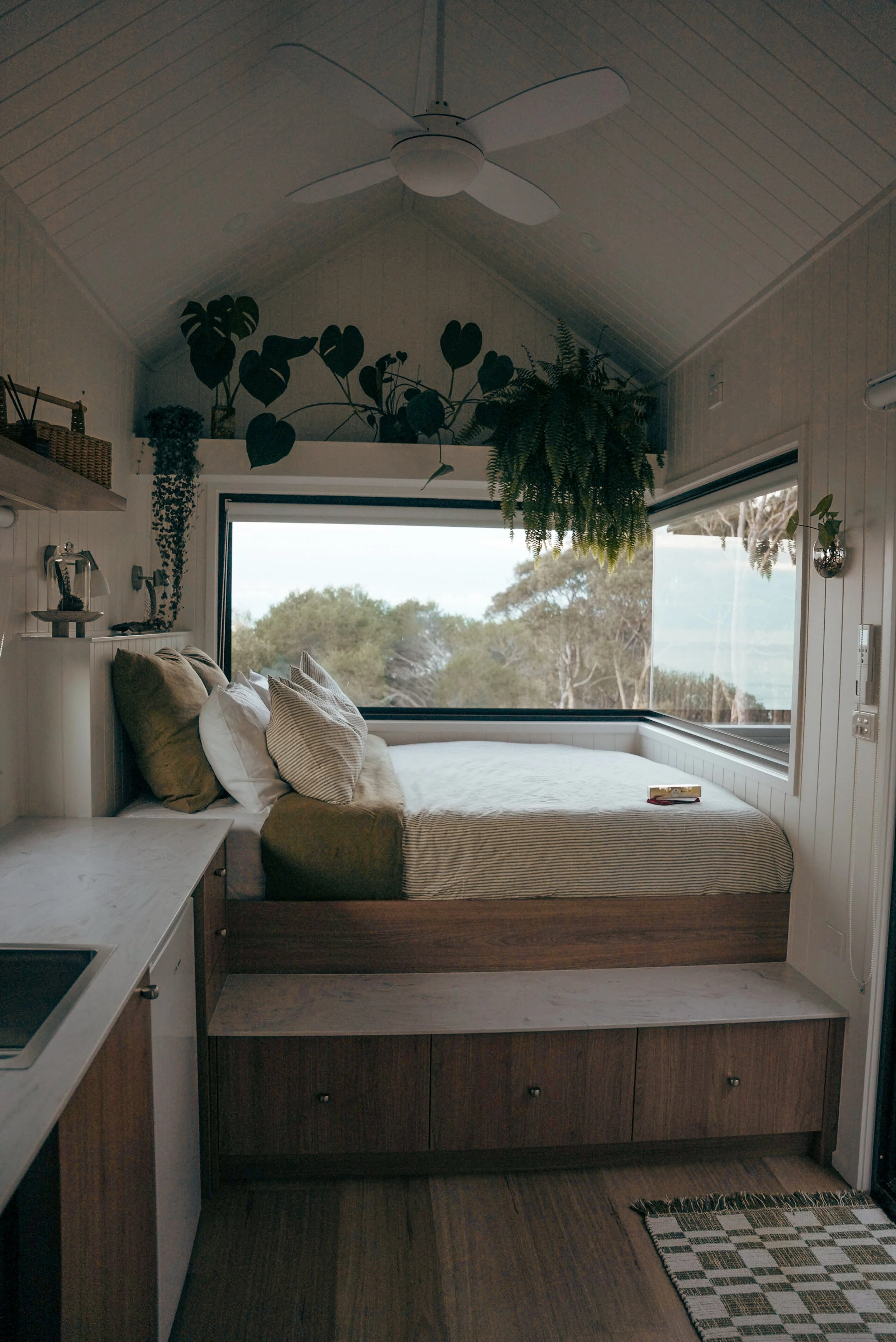
3. Opt for Multi-Functional, Space-Saving Furniture
Every piece of furniture in a tiny home should pull double duty. Look for space-saving furniture that adapts to your daily routine:
Sofas with built-in blanket chests or lift-up bases.
Ottomans that act as footrests, hidden storage, and extra seating.
Drop-leaf dining tables that fold flat against the wall when you finish dinner.
Investing in adaptable pieces keeps your pathways clear and ensures your layout remains flexible.
Related: The Complete Guide to Tiny Home Living in Australia: Is It Right for You?
4. Master Smart Kitchen Storage
Kitchens are notoriously difficult to keep organised in a small footprint. To maintain a clutter-free cooking zone, you need smart kitchen storage tricks.
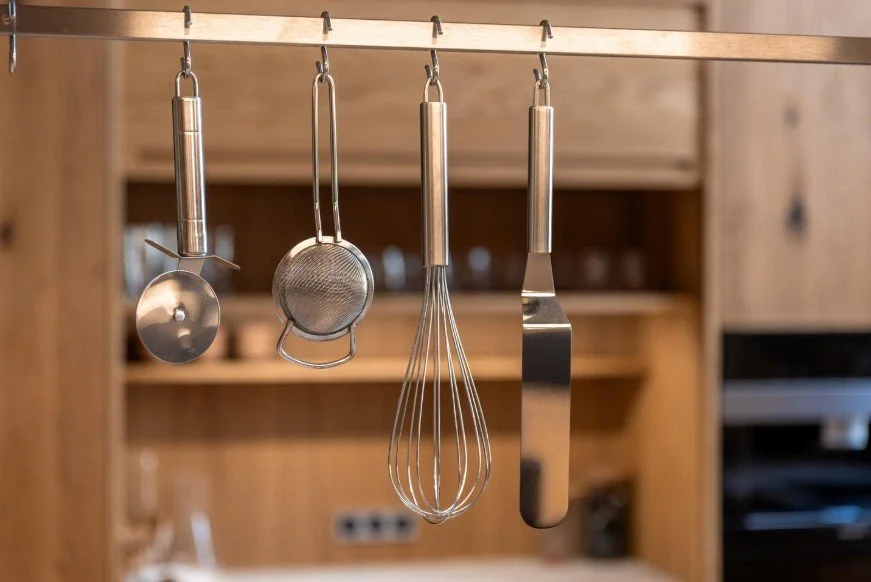
Utilise magnetic spice strips on the splashback, hang pots and pans from ceiling rails, and slide deep, pull-out wire baskets into your lower cabinetry. Choosing integrated appliances, like a compact multi-oven or drawer dishwasher, also saves premium bench space.
5. Build Under-Floor Storage Trays
If your tiny house features a raised living room platform or a multi-level floor layout, do not let that void go to waste. Deep, rolling under-floor storage drawers are perfect for stashing away seasonal clothing, camping gear, or spare bedding out of sight.
6. Use Toe-Kick Drawers
The small gap between your kitchen cabinets and the actual floor—the toe-kick zone—is usually completely wasted. Converting these gaps into slim, push-to-open drawers gives you the perfect spot to store flat items like baking trays, cutting boards, or pet bowls.
7. Maximise Over-Door and Back-of-Door Areas
The backs of internal doors (such as the bathroom or wardrobe doors) are underutilised real estate. Hanging pocket organisers, towel rails, or slim wire spice racks on these surfaces keeps your everyday essentials easily accessible without eating into your wall space.
8. Integrated Living Area Cabinetry
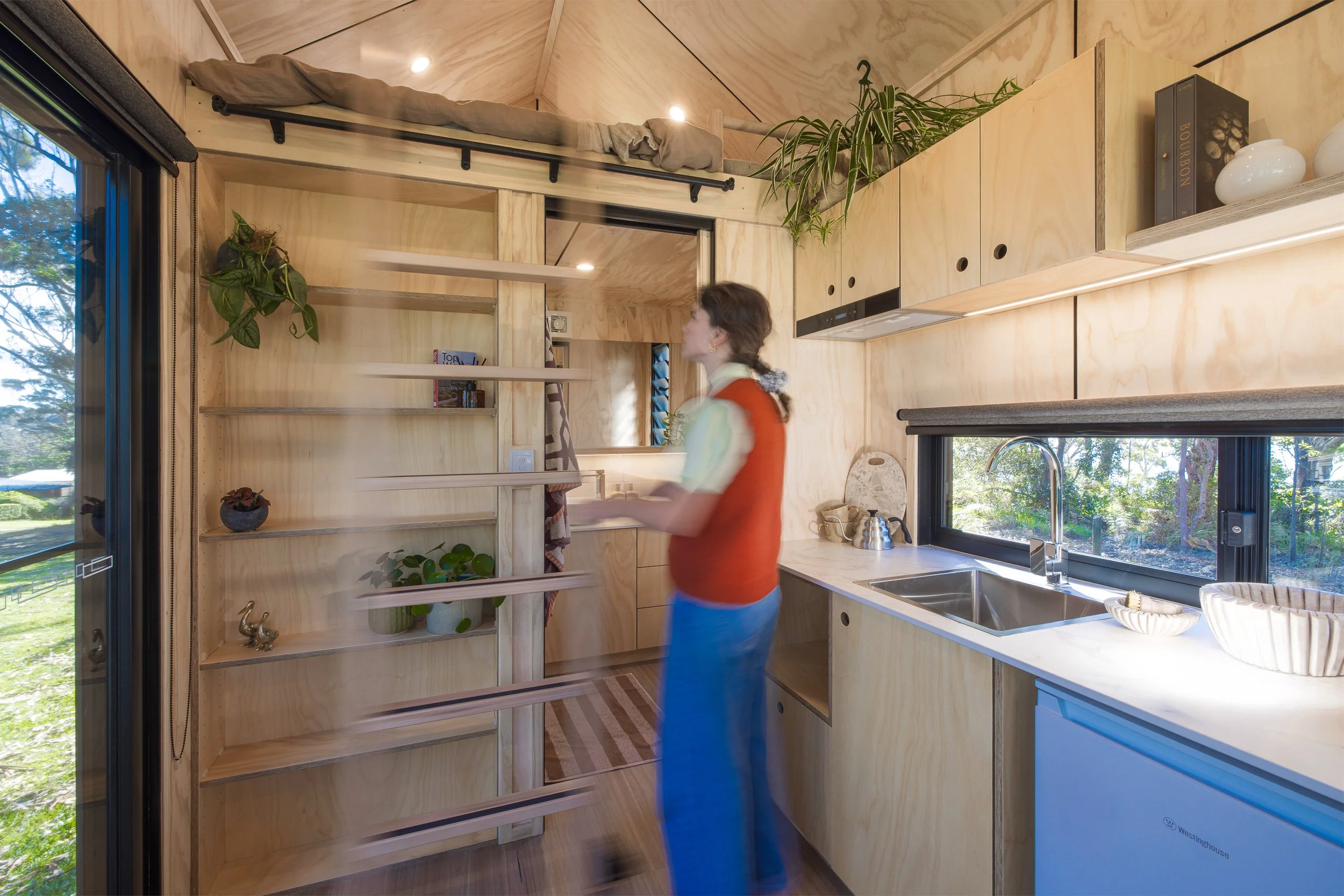
Instead of scattering standalone furniture throughout your home, consider custom-built wall units that seamlessly integrate multiple functions into a single wall.
Combining your entertainment unit, wardrobe, and desk space along one side of the room leaves the centre of your tiny home wide open, preventing that cramped, claustrophobic feeling.
9. Choose Pocket Doors and Sliding Barn Doors
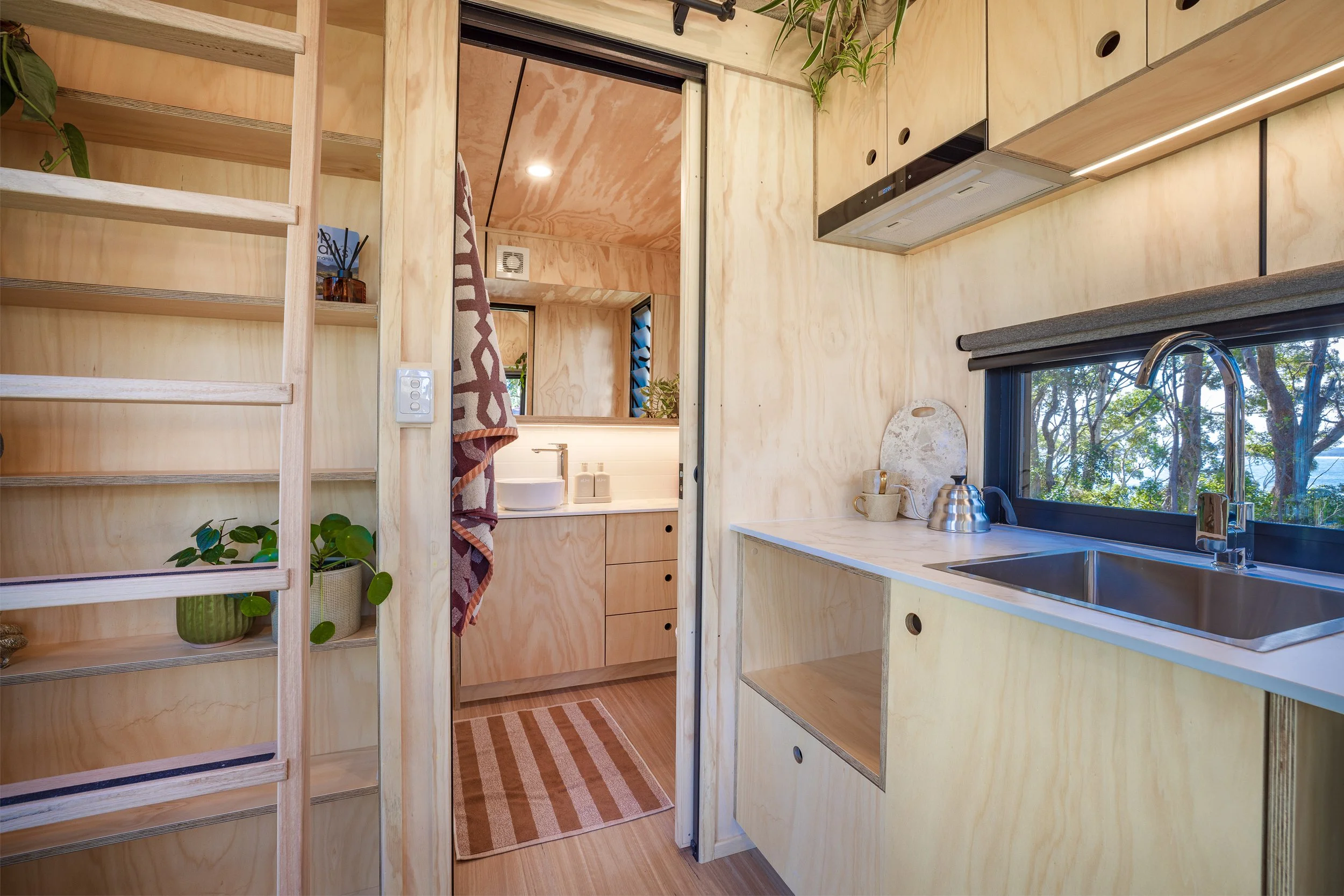
Traditional swinging doors require a surprising amount of clearance to open and close, creating "dead zones" where you can't place furniture. Switching out standard interior doors for sliding pocket doors or rustic barn doors eliminates this issue entirely, allowing you to utilise the floor space right next to the doorway.
10. Floating Shelves and Pegboards
Heavy, bulky wall cabinets can occasionally make a narrow room feel closed in. Swap them for floating timber shelves or highly adjustable pegboards. Pegboards allow you to move hooks and shelves around as your storage needs change, making them an incredibly versatile asset for home offices, craft corners, or kitchens.
Ready to Customise Your Dream Space?
The beauty of a tiny home is that it can be completely tailored to your personal habits and lifestyle. If you want to dive deeper into how these elements come together, read our comprehensive FAQs or explore our flexible design packages to see how we balance premium aesthetics with everyday practicality.
About Designer Eco Tiny Homes
At Designer Eco Tiny Homes, we have been helping Australians transition to a simpler, more intentional lifestyle since 2016. As Australia’s leading tiny home builder, our expert team designs and constructs premium, eco-friendly living spaces tailored to your unique needs.
Whether you are looking for mobile tiny houses for ultimate flexibility, council-compliant modular homes for a permanent block, or structural shells for a custom DIY project, we pride ourselves on exceptional craftsmanship and sustainable building practices. Feel free to learn more about us and our environmental philosophy.
Ready to see what is possible? You can browse homes across our diverse design series, and find out how our tailored finance options can make your dream house an affordable reality.
Enquire today to chat with our design specialists and take your first step toward a beautiful, clutter-free lifestyle!
Related Reads: